

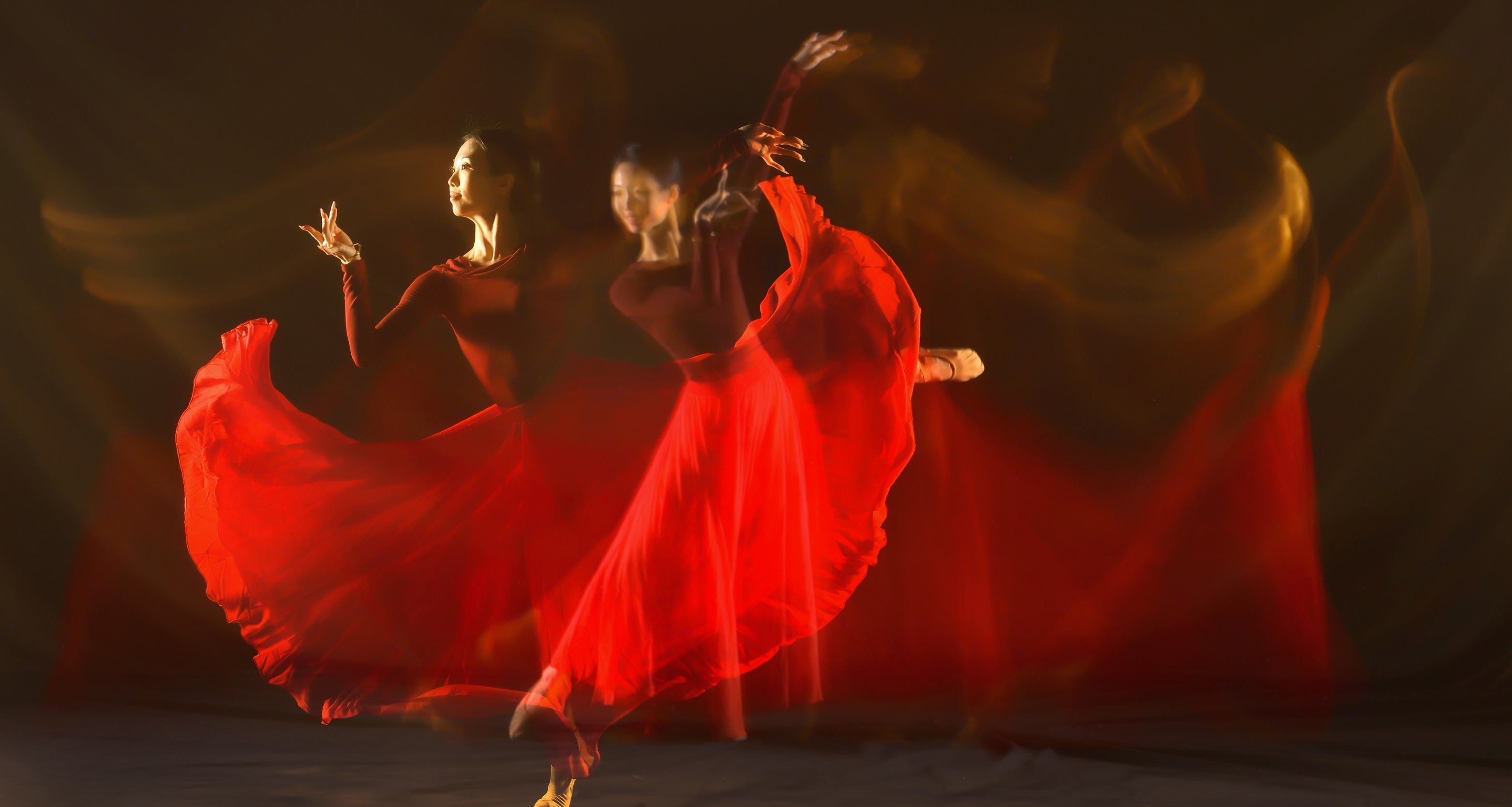
Studio flashes have been considered the backbone of professional photography for decades – and for good reason. While continuous light shines steadily, a flash works with a single, extremely short burst of light. This subtle difference determines in many situations whether a subject is captured with razor-sharp focus, vibrant colors, and full detail, or not. Anyone working in the studio – whether portrait, fashion, product, or beauty is the focus – can rarely do without a well-coordinated flash setup.
How a studio flash shapes the subject
A studio flash releases its light energy in fractions of a second. This is precisely where its greatest photographic advantage comes from: motion is frozen, the finest structures are preserved, and ambient light plays only a minor role. In practice, this means more creative control. Aperture, shutter speed, and ISO can be chosen largely independently of the existing room light, because the flash burst provides the decisive part of the exposure.

It is this separation between ambient and flash light that gives studio flashes their characteristic image effect. Skin tones appear three-dimensional, material surfaces gain texture, and colors stand out cleanly from the background. Depth of field can also be controlled more precisely, because with sufficient light reserve, even smaller apertures can be used without any problems – a point at which more powerful models like the MSN-600 Pro II can fully utilize their reserves.
Where flashes play to their strengths
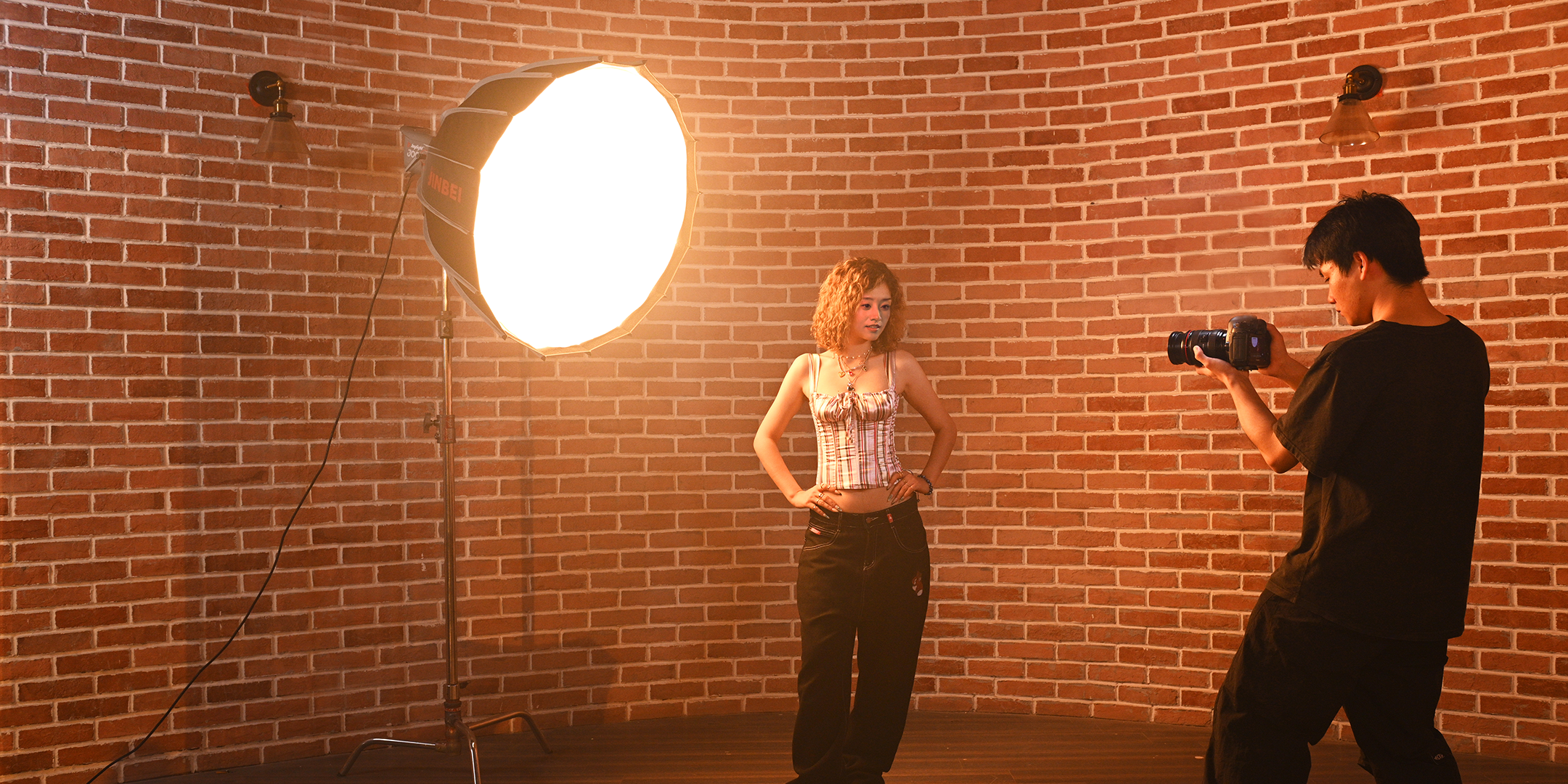
A classic area of application is portrait and fashion photography. Here, a studio flash provides the typical, clear lighting, in which facial features are modeled and fabrics are depicted with full volume. In combination with a softbox, beauty dish, or strip light, soft beauty looks can be realized just as well as high-contrast fashion setups or cinematic background lighting. More compact models like the MSN-400 Pro II usually cover this everyday studio work effortlessly.
The flash also plays to its advantages in product photography. The short exposure time ensures maximum sharpness, even with delicate details such as jewelry, technical products, or textile surfaces. Anyone who regularly produces series with an identical look also benefits from the high color consistency of modern flashes – from image to image, the light quality remains almost identical.

And finally, there are areas where continuous light simply reaches its limits: frozen motion studies, water spray, splash, or dance shots. A modern flash with a freeze mode provides flash times that leave even the fastest movements perfectly still – something that continuous light cannot do in this form.
Flash or continuous light – a comparison with different roles
LED continuous lights have gained significant ground in recent years. They allow you to assess the lighting effect live before triggering, are ideal for video, streams, or content formats, and make the entry into the studio setup pleasantly intuitive. Anyone who produces both in parallel – photo and video – will therefore be better off with a combination of flash and LED continuous lights.
In many photo disciplines, the flash is often the superior choice. One reason is the sheer amount of light: A studio flash releases an amount of energy in a fraction of a second that continuous light simply cannot provide in the long run – without getting hot or blinding models. This creates reserves for small apertures, short shutter speeds, and for situations where you have to work against daylight or ambient light. High-speed sync, such as that found in the current models of the MSN-Pro-II-Serie, is made exactly for such moments.
In addition, there is the already mentioned ability to freeze motion. Where continuous light depends on the combination of available light intensity and shutter speed, sharpness with the flash is created by the short light burst itself. In beauty, sports, or action photography, this is often the decisive difference. Flash and continuous light are not mutually exclusive – they fulfill different tasks. Where continuous light scores with its constant lighting effect, the flash plays to its strengths in the short, targeted light burst.
Conclusion: Flash light remains a class of its own
Studio flashes are not a competitor to continuous light, but an independent class of tools with clear strengths: short exposure, high power reserves, frozen motion, and a three-dimensional lighting effect that is hard to replace in portrait, fashion, and product photography. Anyone who wants to use these advantages in their own studio will find with a modern flash the technical foundation to implement ideas reliably, quickly, and with full creative control.
Teilen:
Photographing Fireworks – Tips & Equipment for Stunning New Year’s Eve Photos