

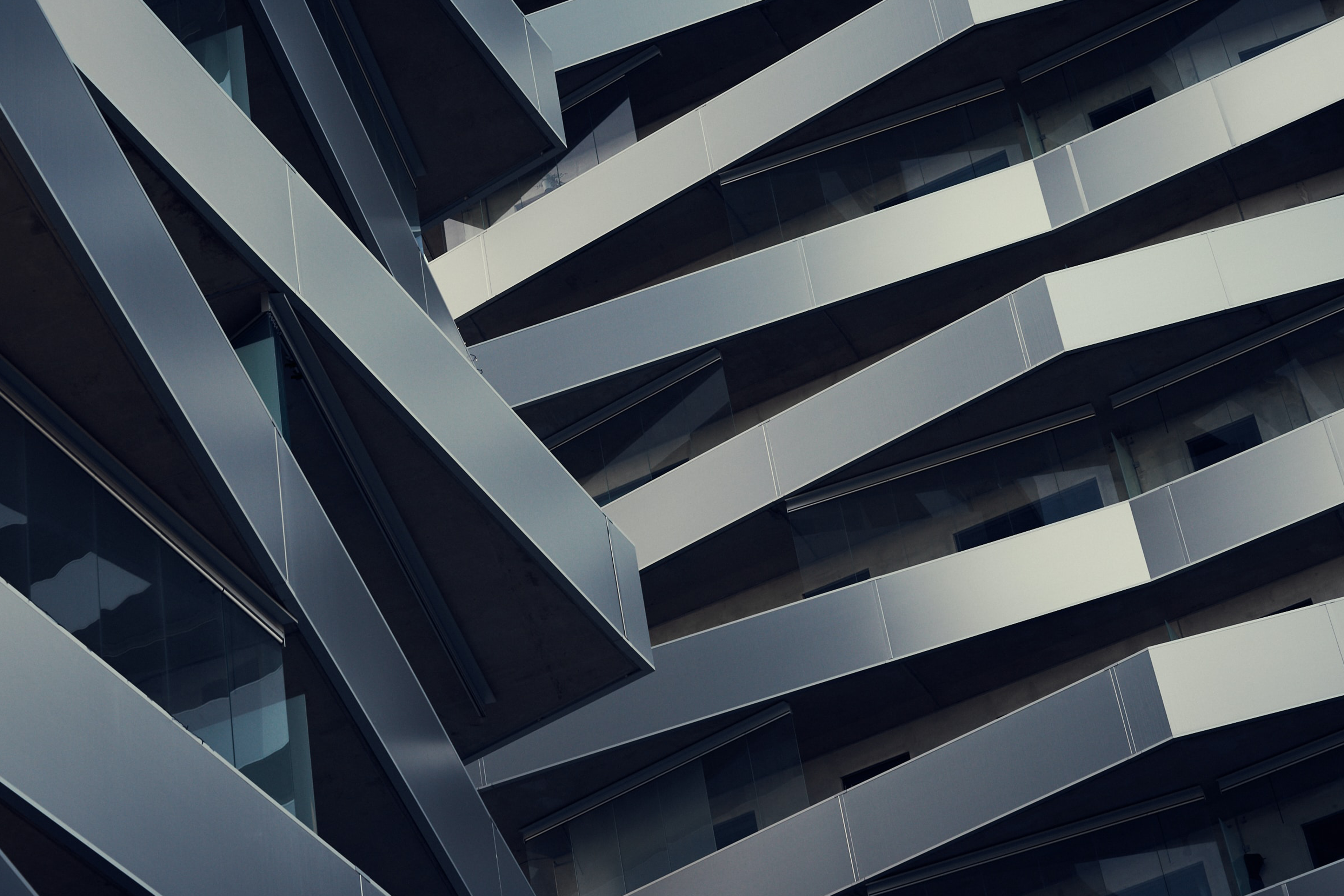
The abstract architectural photography is as old as photography itself. This artistic type of photography is less about the object itself, i.e. the house, and more about the to form , the Colors , the lines and the perspectives that the building offers.
As is so often the case in abstract photography, there is no patent recipe for abstract architectural photography, after all, the photographers themselves decide what they consider abstract and what not. Although there are lenses that are more suitable for capturing a building from a unusual perspective to adhere to, but there are no fixed rules by which this discipline would be defined. But therein lies the appeal of abstract architectural photography. Everything is allowed and it is less important what is photographed than how something photographed becomes.
Zoom objects sharpen the view
How is it possible to capture a building or details of it in such a way that the viewer first has to puzzle over it or is amazed
A practical help in the search for new perspectives zoom lenses . In addition to the standard zoom, which usually has a focal length range of 24 to 70 millimeters covers, there are variants in the wide-angle range and a telephoto zoom. The zoom lenses make it easy to change perspective without having to change location. Does something look exciting in the long shot or does the picture look better if an element with a longer focal length is particularly emphasized The desired abstraction only results from prolonged trial and error and it is often snapshots that may not have been on the plan at all that lead to the desired success in the end..

The rules of architectural photography do not apply here
The architectural photography is one of the oldest and at the same time one of the most rigorous disciplines of photography. This is about precision , to the correct scale , around sharpness and the absolute avoidance of falling lines . This is also the reason why professional architectural photographers are increasingly using so-called Tilt and Shift lenses To fall back on. Thanks to the large image circle and the shifting of the imaging surface, converging lines and incorrect perspectives can be corrected during the recording. There is no need for this in abstract architectural photography, after all, unusual perspectives and massively falling lines are supposed to create effects that at first glance have little to do with reality.
Proven techniques for abstracting buildings
Some techniques presented below are more likely to produce the desired results than others. Anyone who has only recently started taking abstract photographs of buildings should take these tips to heart and conduct their own experiments based on them.
The further the better
wide angle lenses can capture perspectives that far outshine the field of vision of the human eye. The wider a lens is, the easier it is to capture images that look abstract and artistic without much effort. For cameras with an APS-C sensor, lenses with a focal length of 10 millimeters , for full-frame cameras, lenses with a focal length of 14 millimeters out of.
Avoid straight lines
At the so-called „dutch tilt“ become all straight lines avoided. That alone represents a conscious abstraction, after all it is unusual for the viewer of the photo to see a house at an angle that is not physically possible.

Depth of field is a must
As with ordinary architectural photography, one is possible for abstract photography large depth of field desired. Aperture values of 11, 16 or even more are therefore recommended. Are the light conditions not ideal and if the exposure time for handheld shots is too long, a tripod to use .
What pleases is with the abstract photography from modern architecture also allowed. Ultimately, it doesn't matter how photographers achieve the desired result and it varies from building to building. It is important that the finished picture is for astonished people, but also for admiring looks cares.
If you too great architecture shots did, please tag usInstagram andFacebook with the hashtag#jinbeiphotobox. We look forward to your results!
Teilen:
Eye autofocus tips
Creative ideas for your holiday photos!